
Does Your Website Build Trust or Lose Visitors?
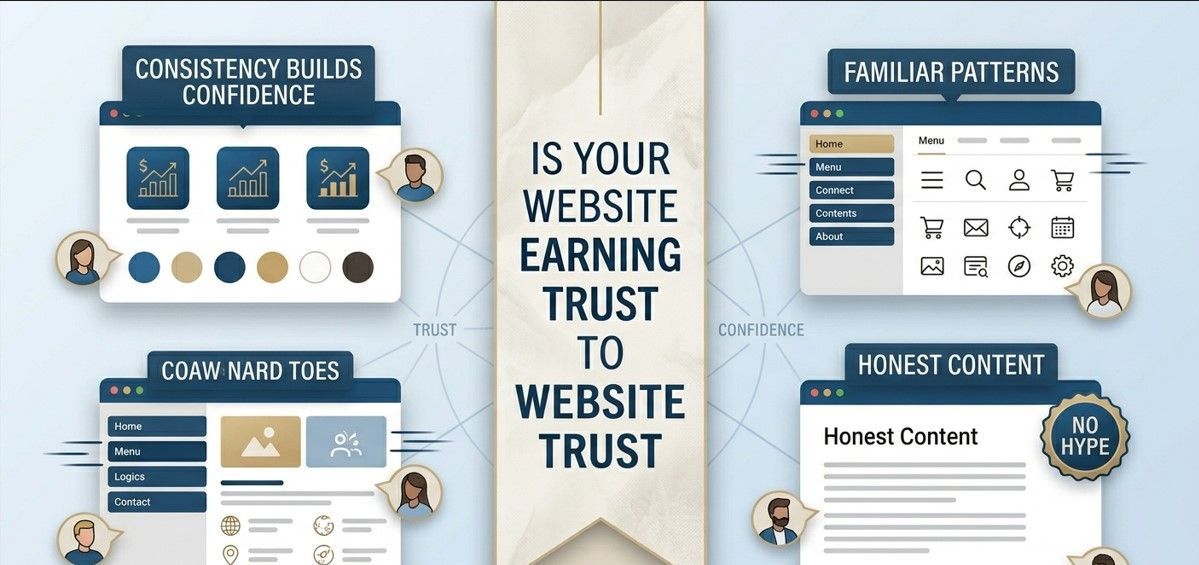
Most people don’t analyze a website; rather, they feel it. Within seconds, something clicks, or it doesn’t. The website layout either feels clear or confusing. The message either makes sense or feels scattered, and there’s rarely a middle ground. That first impression impacts everything that follows.
Clarity Comes Before Design
Most people assume that trust comes from visual design, colors, images, and animations. But before any of that matters, people look for clarity. They often ask the following questions. What does this business do? Where am I supposed to go next? What action should I take?
If those answers aren’t obvious, trust fades faster.
A clean structure, simple navigation, and clear messaging improve usability and create confidence. When users no longer need to search for information, they feel more comfortable staying.
Consistency Builds Confidence
Trust often comes from consistency, i.e., the way headings are written, the tone of the content, and the alignment of elements on the page.
When everything seems consistent, the website feels intentional. When it doesn’t, even small inconsistencies can create doubt. For example, the buttons that look different, fonts that change unexpectedly, or the sections that feel disconnected.
These details might seem minor, but they affect how users interpret the overall experience. Consistency shows that the business behind the website is organized and trustworthy.
Speed Shapes First Impressions
Before users read anything, they notice how fast the site loads. If it feels slow, they might be frustrated.
If it loads smoothly, their experience feels effortless. Speed doesn’t just affect performance; rather, it affects perception.
A fast website feels modern, while a slow one feels outdated. That immediate impression affects whether users continue exploring or leave within seconds.
Design That Stays Out of the Way
The strongest websites don’t try too hard and don’t overwhelm users with too many elements competing for attention.
Instead, these websites guide the eye naturally.
Whitespace, balanced layouts, and thoughtful spacing make enough room for content to breathe. Users often focus on the matters instead of filtering through distractions. This kind of design feels quiet, but effective.
Familiar Patterns Make Navigation Easier
Users never want to learn how to use a website; rather, they expect it to feel familiar. For example, menus in expected places, the buttons that behave the way they should, and pages that follow a logical flow.
When a website follows these patterns, users usually move through it without hesitation. When it doesn’t, simple actions feel harder than they should. That friction reduces trust; not because the site is broken, but because it feels unfamiliar.
Content That Feels Honest
Words matter a lot than most people think. Overly complex language or exaggerated claims often create distance. Simple and direct messaging builds trust.
Users want to know what they’re reading without effort. They want information that feels genuine, rather than forced or overly polished. Clear content shows confidence, and confidence is something users recognize faster.
Building Trust through Development
Behind every smooth user experience is a solid technical foundation.
Responsive layouts, optimized performance, and smooth integration contribute to how a website feels. This is where professional web development in Westlake plays a role.
A web development company ensures that the experience remains consistent across devices, browsers, and user interactions.
When everything works the way it should, users never think about the technology. Rather, they simply trust the result.
At the same time, working with a web design company in Westlake - Compu 360 helps bring together structure, clarity, and visual balance naturally for users from the first interaction.
Conclusion
Trust isn’t built through a single element, as it’s the result of many small details working together. These details include clear structure, consistent design, fast performance, and honest content.
When these elements align, a website feels easy to use and easy to trust. Within those first few seconds, that trust is often what determines whether someone stays or leaves.